
The Alaska SeaLife Center has announced a very special new arrival to SeaWorld Orlando’s walrus family.
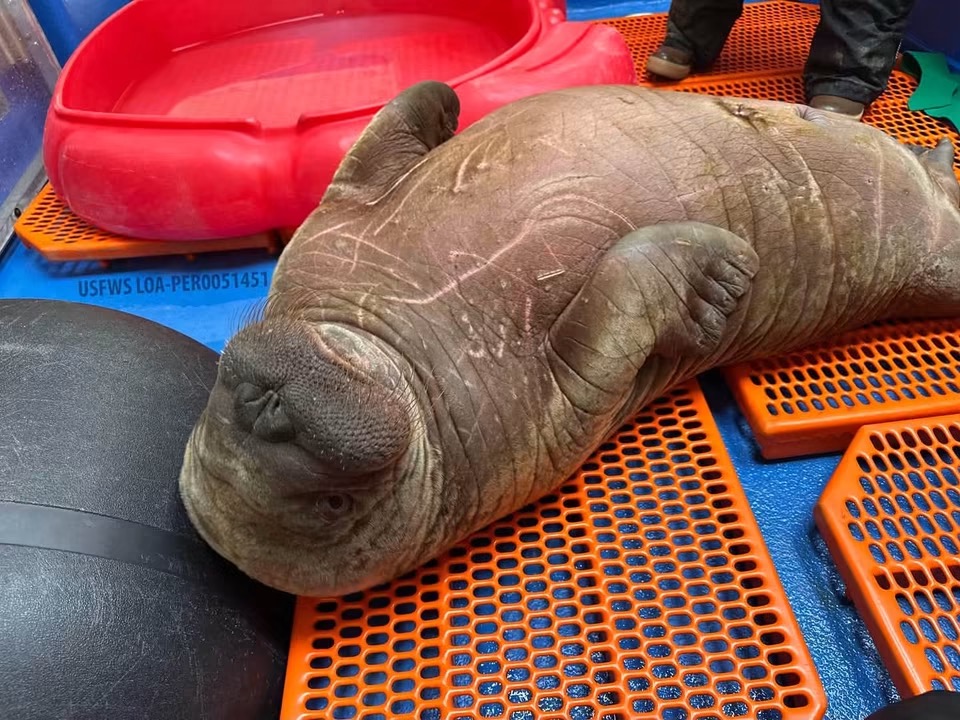
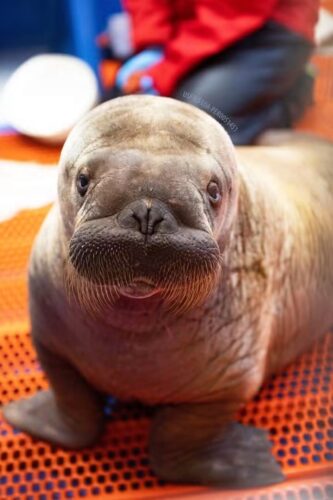
Please say a warm welcome to Annautaq! Annautaq (pronounced ah-now-tuck) was rescued in Alaska and rehabilitated by the Alaska SeaLife Center. He is only the 12th orphaned Pacific walrus calf admitted to the Alaska SeaLife Center in its history, making his rescue and rehabilitation exceptionally rare. His story is now beginning a new chapter in Orlando. And if Annautaq’s journey sounds a little familiar, there’s a good reason.
This isn’t the first orphaned walrus to connect the Alaska SeaLife Center and SeaWorld Orlando. In July 2024, a tiny female Pacific walrus calf was discovered alone near Utqiagvik, Alaska, after a walrus herd had left the area. She was transported to the Alaska SeaLife Center, where she required intensive, around-the-clock care. According to the Alaska SeaLife Center, SeaWorld sent a zoological team with walrus-care experience to Alaska within 24 hours of receiving the call for assistance. Other zoological organizations also contributed experienced caregivers as the Center worked around the clock to care for the orphaned calf.
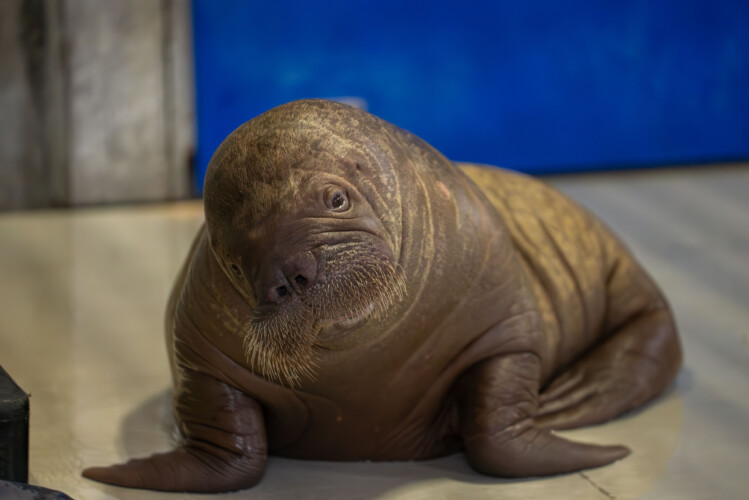
The Center eventually named the little walrus Ukiaq, an Iñupiaq name meaning “autumn.” After months of rehabilitation, the U.S. Fish and Wildlife Service determined that Ukiaq could not be released back into the wild. SeaWorld Orlando became her permanent home because of the park’s experience caring for walruses and the social environment its existing walrus group could provide. Ukiaq arrived at SeaWorld Orlando in September 2024, weighing approximately 220 pounds.
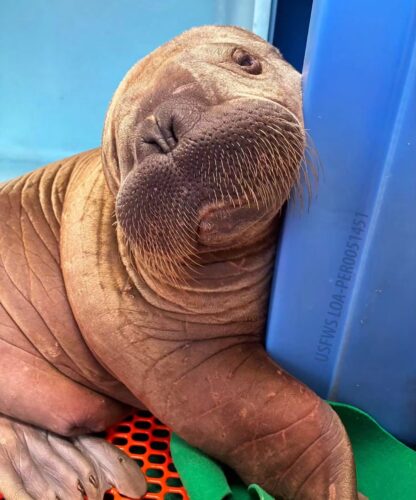
Which brings us back to Annautaq. His rescuer, Violet Anniskett, named him Annautaq to honor her father. Annautaq is an Iñupiaq word associated with an “axe” or chopping tool, mostly related to the verb meaning to chop with an axe. The Alaska SeaLife Center first teased the arrival of its newest walrus patient on September 18, revealing that its Wildlife Response team was caring for an exceptionally rare orphaned Pacific walrus calf. As you can probably guess, caring for an orphaned walrus is neither easy nor cheap. The Alaska SeaLife Center explained that these patients require specialized nutrition, veterinary treatment, experienced animal-care staff, and around-the-clock attention. Over the weeks, we learned more about Annautaq through the Center’s social media updates. Read more about his incredible rescue here.
According to the Alaska SeaLife Center, he was estimated to be around five months old and weighed approximately 200 pounds when he arrived in Seward. He was dehydrated and had several superficial wounds, and the veterinary team needed to perform additional diagnostics. However, unlike some of the much younger orphaned calves the organization has cared for, he arrived alert, responsive, and in good body condition. By early October, the Center reported that he was doing very well. It was time for his caregivers to look beyond his immediate medical needs to something particularly important for a walrus: his social needs. Since he has been deemed unreleasable due to the amount of human contact he’s had, it was time to find a permanent home for the little guy.
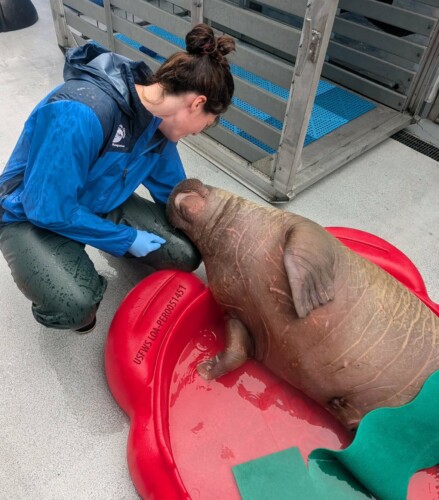
Annautaq arrived at SeaWorld in early October after being non-releasable. Walruses are incredibly social animals, and the Alaska SeaLife Center has specifically emphasized the importance of meeting the social needs of orphaned calves as their medical condition stabilizes. Of course, animal introductions happen on the animals’ schedules, not ours. SeaWorld’s animal-care team will decide when and how Annautaq meets the other walrus herd members, Garfield, Kaboodle, and Ukiaq, based on their individual needs and behaviors. But we can’t help hoping that, in time, another young walrus could prove especially beneficial for Ukiaq, who has only shared space with older adults since Kora and ChouChou left for SeaWorld San Diego in January. Watching two orphaned walruses with such similar stories, rescued in the same state and cared for by the same organization, make friends and grow together sounds almost too perfect…and we are here for it.
We expect SeaWorld will give its newest arrival plenty of time to settle into his new surroundings before deciding when guests can see him, though he seems highly adaptable and eager to get on with life. We’ll also be watching closely for those eventual introductions to the rest of Orlando’s walrus family. Many are especially interested to see how his relationship with Ukiaq develops. Some of us are also wondering whether the two could have come from the same herd…or even be related. Genetic testing could potentially help answer that question, and what a story THAT would be.
This was an enormous effort, and we are honored to welcome Annautaq to SeaWorld Orlando, where we are sure he will have guests lining up to see him in no time. We are told he’s very confident and is a bit particular about who he trusts at the moment.
Want to Help Other Rescued Marine Animals Like Annautaq?
The Alaska SeaLife Center’s Wildlife Response Program relies on donations to help provide specialized care for rescued and rehabilitating marine animals like Annautaq and Ukiaq. Those interested in supporting the program can donate directly through the Alaska SeaLife Center at alaskasealife.org/donate.
Read SeaWorld’s Official Statement:
**ORLANDO, Fla. (Oct. 21, 2026)** — Found alone on a remote northern Alaska beach and rehabilitated by Alaska SeaLife Center, an orphaned Pacific walrus calf now has a new home at SeaWorld Orlando, globally recognized for its marine animal expertise and one of only four U.S. institutions currently capable of housing walruses.
Weighing approximately 220 pounds, the five-month-old male calf, named Annautaq, is receiving around-the-clock attention from SeaWorld’s dedicated animal care and veterinary team as he settles in and prepares to join the park’s herd of walruses, including Uki, Kaboodle and Garfield. Uki is a two-year-old rescued Pacific walrus that shares a similar rescue story. She has called SeaWorld Orlando home since completing rehabilitation at the Alaska SeaLife Center.
His arrival follows a rescue led by local residents and wildlife experts, specialized rehabilitation at the Alaska SeaLife Center and a collaborative effort to give him a future he could not have in the wild.
A Remarkable Rescue
Annautaq’s rescue is quite remarkable. Violet Anniskett, a wildlife research intern and local community member, and U.S. Geological Survey scientist Tony Fischbach discovered the calf on a remote beach in Northern Alaska after a walrus herd departed during heavy surf. They found the orphaned calf hiding between the older remains of two adult walruses, already being targeted by scavenging birds and unlikely to survive without intervention. They cared for him over several days before he could be flown to the Alaska SeaLife Center in Seward, with help from the local community and federal wildlife officials.
The community supported Annautaq’s rehabilitation, knowing he would remain in human care and could help people better understand Pacific walruses. Anniskett named him Annautaq (pronounced “ah-now-tuq”), meaning “axe” in Iñupiaq, in honor of her father’s Iñupiaq name.
SeaWorld sent animal care and veterinary staff experienced in caring for walruses to Alaska to help provide intensive care alongside the Alaska SeaLife Center team and prepare Annautaq for his 4,000-mile journey to Florida. His story is part of SeaWorld’s long-standing rescue mission, which has helped more than 43,000 animals in need.
Although Annautaq responded well to rehabilitation, the U.S. Fish and Wildlife Service determined he could not be released into the wild. Pacific walruses rely solely on their mothers’ milk for nutrition throughout their first year of life and depend on their mother for protection and the development of essential survival and social behaviors. Experts from across the walrus care community worked together to evaluate Annautaq’s long-term needs and determine which home would be best for his future. His placement at SeaWorld Orlando was guided by his long-term care and social needs, including the opportunity to grow up alongside other walruses.
“Annautaq’s story shows why having specialized marine mammal rehabilitation capacity in Alaska is so important,” said Jane Belovarac, wildlife response curator at the Alaska SeaLife Center. “When an orphaned walrus calf is found in a remote part of the state, a successful response depends on being able to move quickly from rescue to intensive, species specific rehabilitative, husbandry, and veterinary care. Our team was able to stabilize Annautaq, support his medical and social needs around the clock and prepare him for the next stage of his care. Getting Annautaq to this point took an incredible network of people, and we’re proud the ASLC could provide the specialized care that helped carry him from rescue in Alaska to his next chapter.”
Around-the-Clock Care
At SeaWorld Orlando, Annautaq is receiving up to six bottle feedings a day, veterinary care and 24-hour support during a planned 30-day quarantine to help protect the health of the resident animals. He receives a specialized high-fat milk formula originally developed by SeaWorld’s veterinary and animal care teams to mimic the rich fat content of natural walrus milk.
“At this young age, Annautaq needs more than nutrition and veterinary care. He also needs close contact and companionship, which our expert team is providing around the clock,” said Jim Kinsler, curator at SeaWorld Orlando. “As he settles in, we’ll make introductions to Garfield, Kaboodle and Uki at his pace. Kaboodle’s experience caring for rescued calves and the opportunity to connect with two-year-old Uki, herself a rescued walrus, make this herd a promising setting for him to learn, build relationships and grow.”
Why the Herd Matters
While he is getting the best care possible, there are some things even the most dedicated human caregivers cannot provide — the opportunity to live with and learn from with other walruses. For an orphaned calf, the best long-term outcome is being part of a herd, which SeaWorld Orlando can provide.
The herd Annautaq will join includes:
– **Uki, 2:** Like Annautaq, Uki was rescued in Alaska and rehabilitated at the Alaska SeaLife Center before arriving at SeaWorld Orlando. She is thriving within the herd, has formed a close bond with Kaboodle and enjoys snow, ice, and enrichment activities.
– **Kaboodle, 23:** An experienced mother and proven surrogate to rescued calves, including Uki. Her nurturing experience will play an important role as Annautaq is gradually introduced.
– **Garfield, 44:** Rescued as an orphaned male calf in Alaska and hand-raised at SeaWorld Orlando, he is a living example of what a rescued walrus can become.
As he acclimates, Annautaq will join Uki in playing an essential role as an ambassador for their species, educating the public on the challenges Pacific walruses face in the wild. His story, like those of many other animals rescued by SeaWorld Orlando, emphasizes the park’s ongoing mission to inspire action toward the protection and preservation of marine life.
The timing of herd introductions and public viewing will be guided by his animal care team. For now, guests can learn about walruses’ unique features, social bonds, and discover how SeaWorld Orlando supports their care by visiting the park’s resident herd in the Expedition Odyssey animal habitat.