
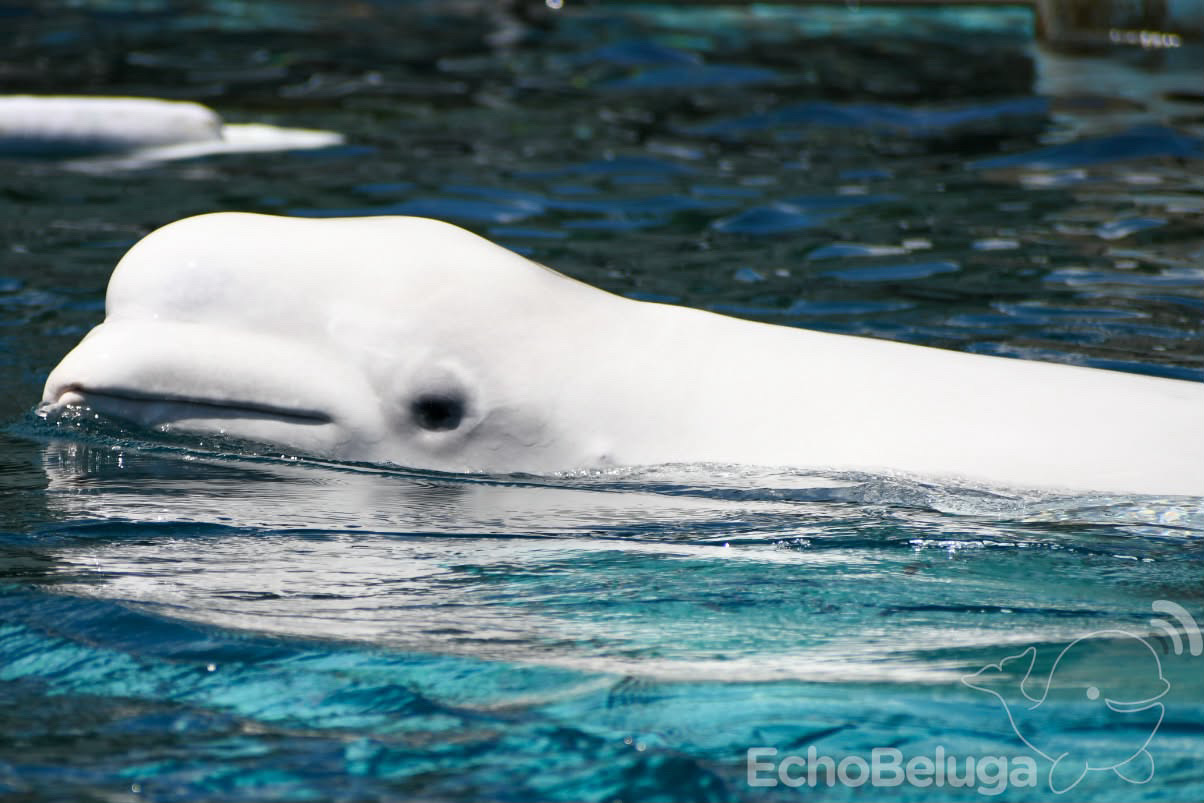
In our latest SeaWorld San Antonio beluga update, the former Marineland whales are continuing to make progress as they settle into their new home. Of the 13 belugas relocated to San Antonio this summer, nine have moved out of Animal Care and into the next stages of acclimation, while four continue to receive care separately. After arriving in San Antonio in several groups over the summer, it’s really nice to hear so many of them are starting to settle in and take these next steps.
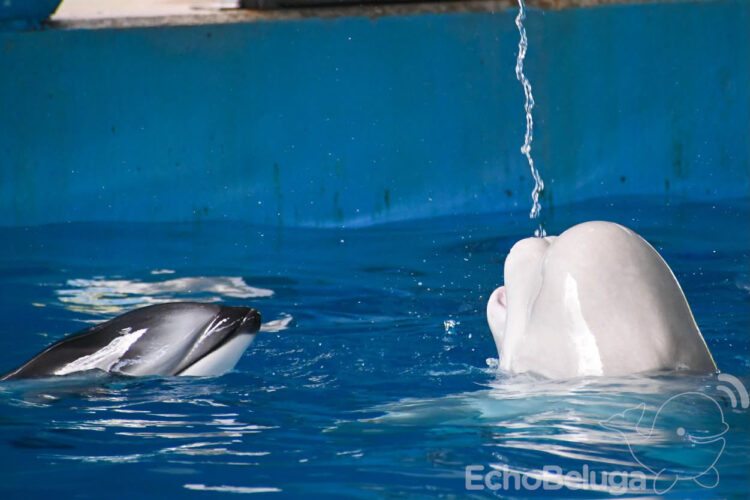
Bertie Botts and Frankie, the first two Marineland belugas to arrive in San Antonio, have reportedly made some of the biggest strides so far. The pair have now been introduced to both dolphins and SeaWorld San Antonio’s resident belugas, meaning they can move freely throughout the enclosures as they please. Being able to explore different areas and choose where they want to spend their time is another great sign that they’re getting comfortable in their new home. Below, you can see Bertie playing with Mai’a, a Pacific white-sided dolphin.
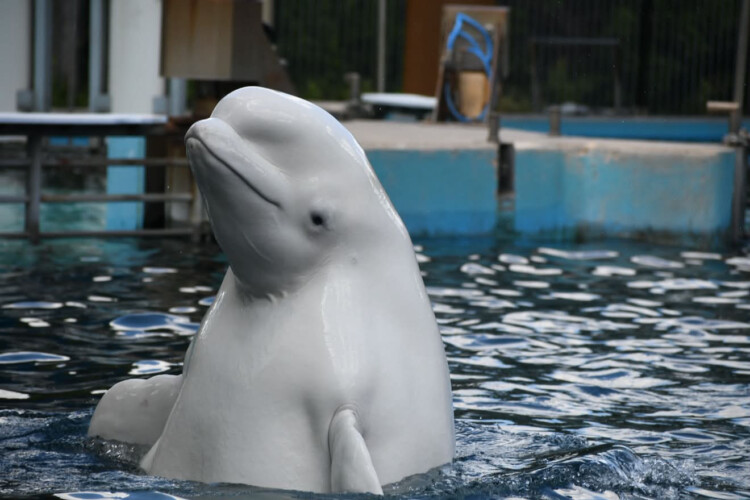
Eve and Gemini are taking another big step as well, with the pair beginning their move to Beluga Stadium. They haven’t met San Antonio’s resident animals yet, but they’re working on gating and getting comfortable moving between the different pools before those introductions begin. We’re also starting to get little glimpses of their personalities as they settle in, and apparently, Eve is a big fan of toys. Gemini is below doing some curious spyhopping for the camera.
These updates might seem unimpressive at first glance, but after everything it took just to get these whales out of Marineland, these minor victories are what we’ve been waiting for. Remember that the relocation itself was only the beginning. These whales are individuals who still have to learn a completely new environment, build relationships with a new animal care team, and eventually navigate introductions with animals they have never met before. That process is particularly interesting at SeaWorld Texas because Beluga Stadium is already a mixed-species environment. Ocean Discovery features both belugas and Pacific white-sided dolphins and hosts beluga and dolphin encounters at the park. As a result, the park has reduced its schedule to two beluga presentations each day. In-water interactions have also understandably been limited during this period.
The progress in San Antonio feels especially encouraging when you consider what has happened to some of the other whales since leaving Marineland. While many are settling into their new homes and beginning the next chapter of their lives, the relocation effort has also seen several heartbreaking losses in a very short amount of time.
Four former Marineland belugas have died since arriving at their new facilities. Peekachu, Rain and Osiris died at Shedd Aquarium in Chicago, while Jelly Bean died at Oceanogràfic in Valencia, Spain. Shedd also lost longtime resident beluga Beethoven during this same period. While Beethoven was not part of the Marineland relocation, his death occurred amid the losses of the newly arrived whales and was included in Shedd’s ongoing veterinary investigations.
Those losses have raised many questions about the whales’ health and what they may have been dealing with before the relocation even began. In recent weeks, we’ve started getting some of those answers. On September 25, Shedd Aquarium shared preliminary findings from the post-mortem examinations of Peekachu, Rain, and Beethoven, offering a clearer look at the health challenges at least some of these whales faced.
The findings showed significant chronic gastrointestinal disease in both Peekachu and Rain. According to Shedd, microscopic changes found during their examinations suggest the conditions had been developing for quite some time, meaning both whales were already dealing with these health issues before they ever arrived in Chicago.
Peekachu’s examination also revealed bird feathers, sticks, and large porous rocks in her stomach, while Rain had small flecks of material that may have been paint. While those findings may sound alarming, Shedd has emphasized that there is currently no evidence that the foreign material was directly related to either whale’s death. Beethoven’s findings were different, with the longtime Shedd resident showing age-associated changes. Most importantly, Shedd said its investigation found no evidence of a shared infectious disease or common environmental factor connecting the deaths of Peekachu, Rain and Beethoven.
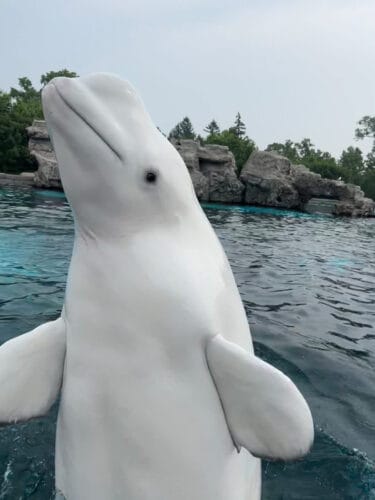
Osiris’ case is being looked at separately. The 26-year-old female had shown some encouraging signs after arriving from Marineland, but she continued to struggle with eating consistently and eventually needed additional nutritional, hydration, and medical support. She died on September 21.
For now, Shedd isn’t assuming her death is connected to the conditions found in Peekachu and Rain. Her medical history and post-mortem findings are being evaluated on their own as the aquarium works to better understand what happened.
The situation in Spain remains less clear. Jelly Bean, who was relocated from Marineland to Oceanogràfic in Valencia alongside Cleopatra, died unexpectedly on September 17 after experiencing difficulties with feeding. Oceanogràfic announced that a post-mortem investigation was being conducted with veterinary pathologists from CEU Cardenal Herrera University, but a definitive cause of death has not yet been publicly announced.
Together, these losses illustrate how complicated the Marineland relocation has been. Moving the animals out of Canada was an enormous undertaking, and relocation doesn’t just magically erase medical conditions that may have developed months or even years beforehand. At the same time, each animal and each loss must be evaluated individually, rather than assuming every death has the same explanation. If you would like to read Shedd Aquarium’s official preliminary medical findings, you can find that article right here.
And that brings us back to San Antonio, where right now, there’s some genuinely encouraging news to share. Nine of the 13 former Marineland belugas are now out of Animal Care, introductions are beginning, and Bertie Botts, Frankie, Eve, and Gemini are all taking their own next steps as they settle into their new home. There’s still a long way to go, and we still don’t know much about what comes next for these whales. But after everything they’ve been through, we’re happy to celebrate the little wins when we get them.
Hopefully, the next time we check in on San Antonio’s newest belugas, we’ll have even more little wins to share. If you would like to support their care, you can donate to the SeaWorld & Busch Gardens Conservation Fund, where 100% of your contributions support animal rescue, habitat protection, and education programs in the U.S. and around the world.