
There’s a new face to look for inside SeaWorld Orlando’s Manta Aquarium, and this one comes with a pretty incredible story.
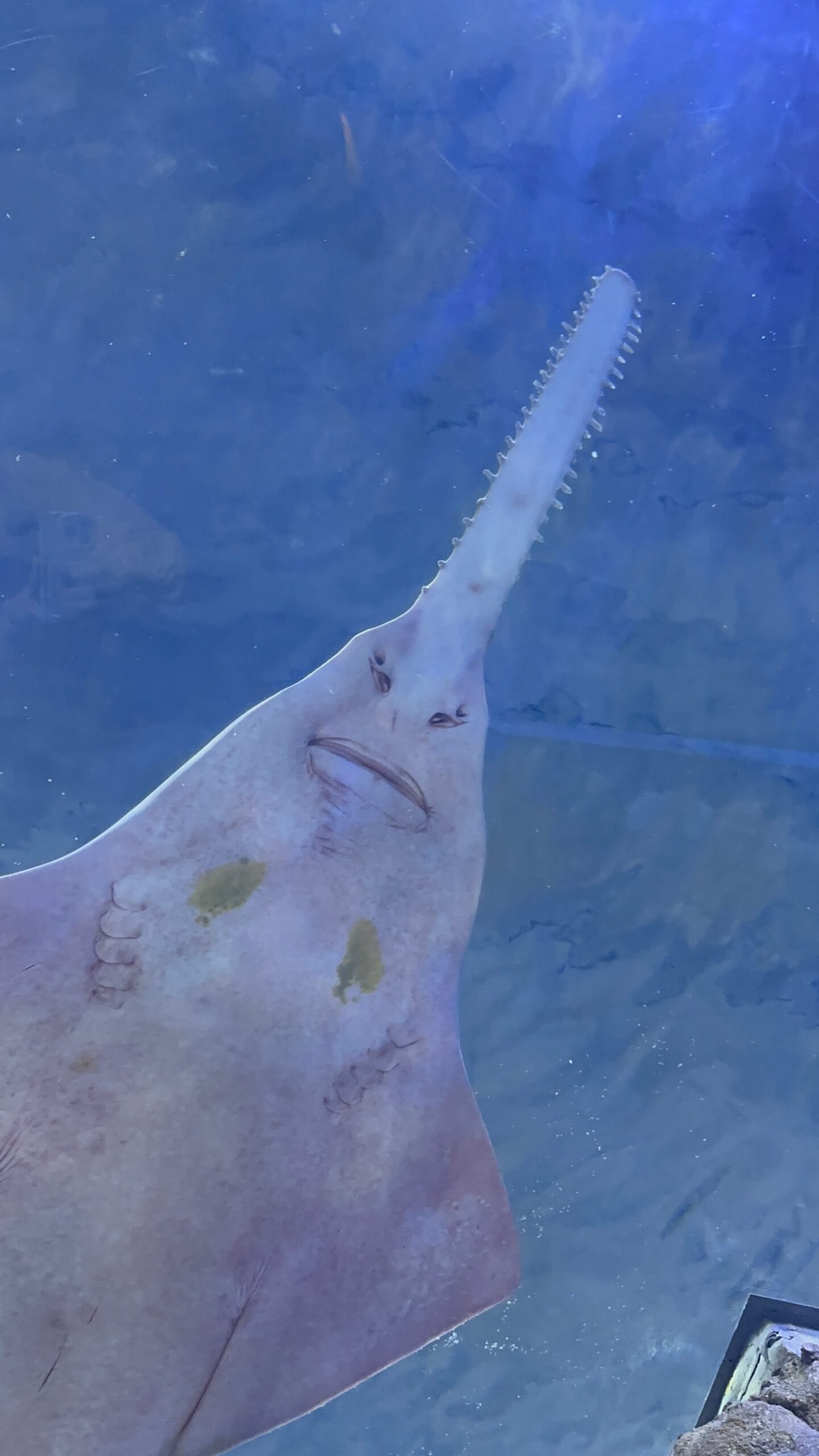
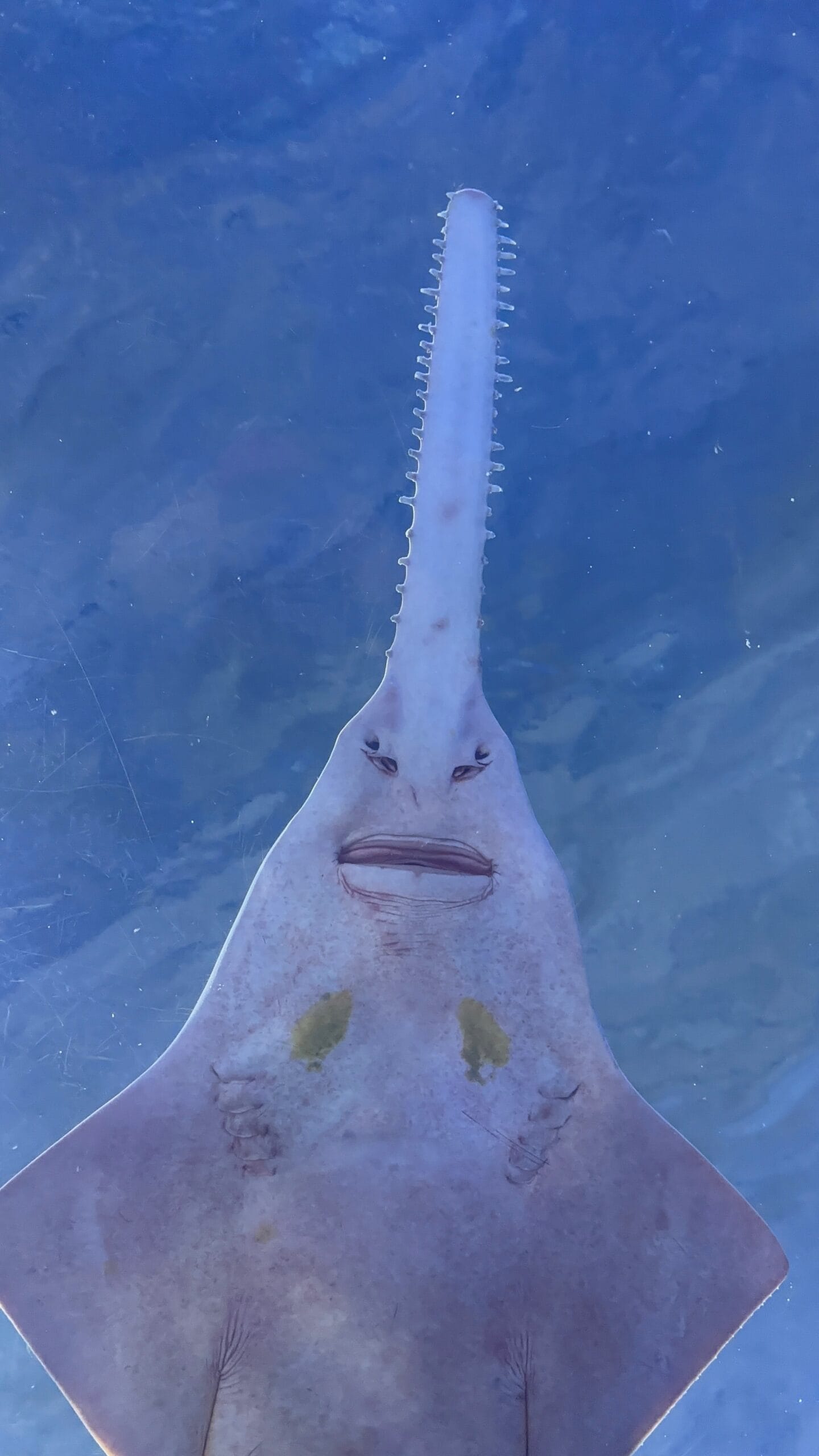
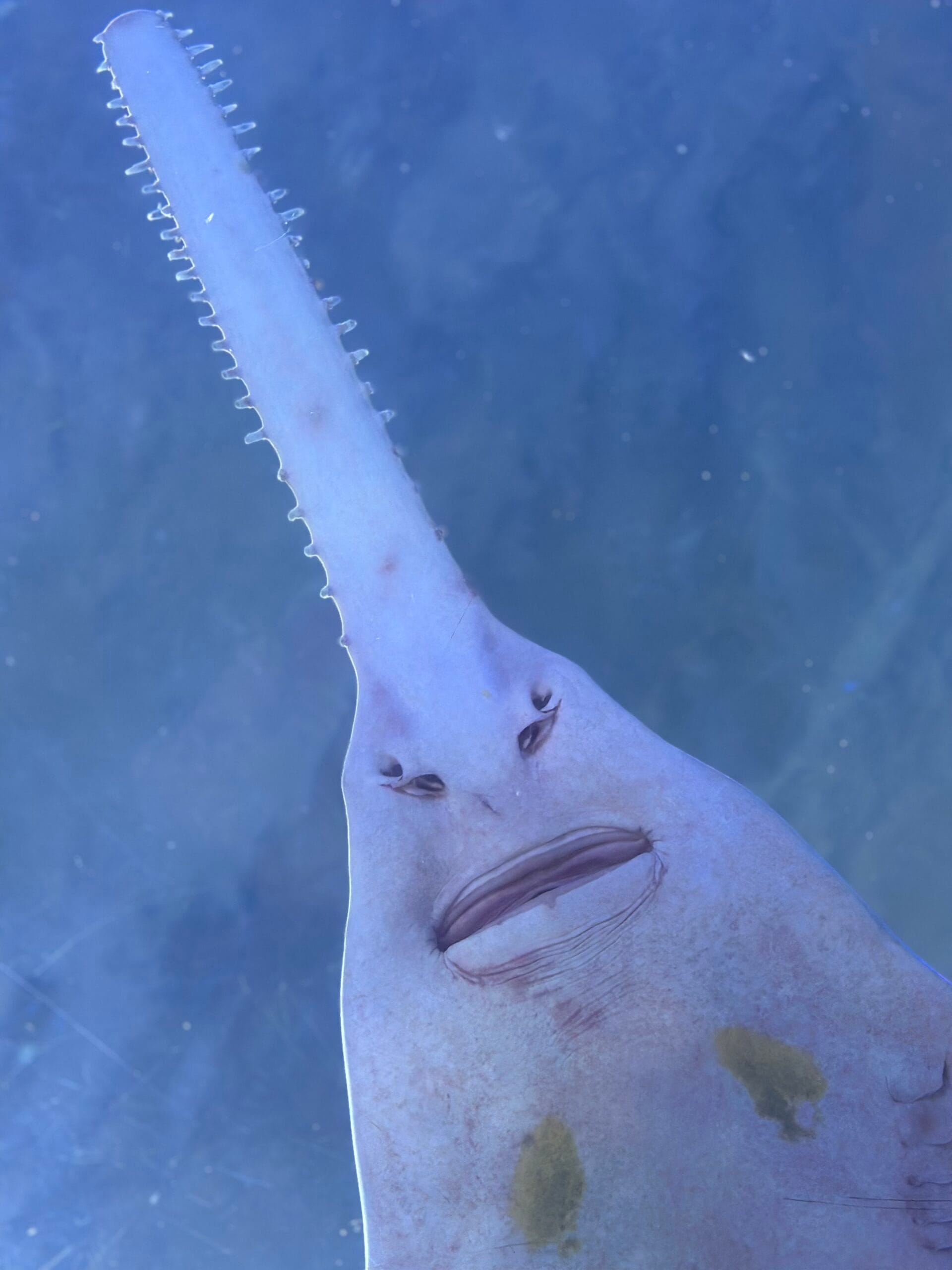
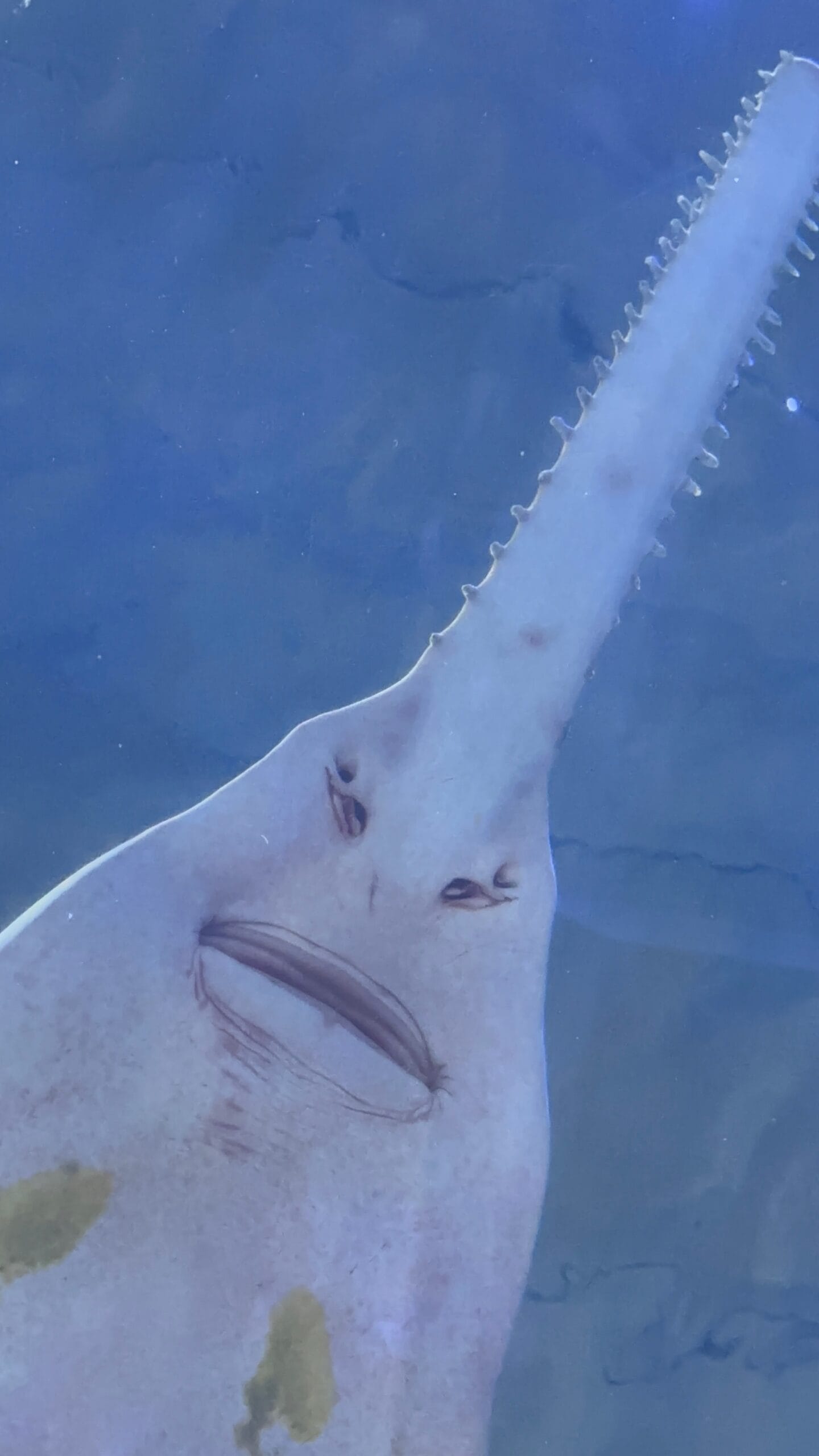
Meet Amelia, a three-year-old smalltooth sawfish and one of just three pups born during a historic first for SeaWorld Orlando.
Amelia was born at SeaWorld Orlando on July 11, 2023, alongside her siblings, Axel and Abby. The trio, two females and one male, made history as the first smalltooth sawfish successfully born in human care in the United States, and only the second successful birth of the critically endangered species at an aquarium anywhere in the world. Let’s take a look at the trio’s incredible history.
Amelia’s parents joined SeaWorld in the 1980s and lived together at SeaWorld Orlando for around 30 years without producing pups. The team had even begun to wonder if they were too old to reproduce, but then, during an ultrasound in May 2023, veterinarians discovered that Amelia’s mother was pregnant at around 40 years old. After additional monitoring, she was moved from the 700,000-gallon Shark Encounter habitat to the quieter Aquarium Health Center. On July 11, the team discovered three pups: Amelia, Abby and Axel. Each measured about two feet long and was born with a protective coating over its rostral teeth, or “saw,” which disappears shortly after birth.
The pups remained at the Aquarium Health Center so the team could monitor their development. By 2025, they had grown to approximately three times their birth length. Because smalltooth sawfish births in human care are extremely rare, Amelia and her siblings are helping researchers learn more about the species’ growth and development.
Although she looks like a shark with a chainsaw attached, Amelia is actually a ray. Sawfish are elasmobranchs, relatives of rays, skates, and sharks. Their skeletons are made primarily of cartilage, and their mouths and gill openings are located underneath their bodies. Their rostrums are also equipped with sensory organs that detect electrical signals from nearby animals. Sawfish can then swing the rostrum from side to side to stun prey before eating it. So Amelia has both a built-in fish detector and a weapon.
Smalltooth sawfish once lived along a much larger portion of the U.S. coast, but habitat loss and accidental capture in fishing gear caused major population declines. Their rostrums make them especially vulnerable to becoming tangled in nets and fishing lines. Today, the remaining U.S. population is primarily found around Florida.
In 2003, the smalltooth sawfish became the first marine fish protected under the U.S. Endangered Species Act, and the species is now considered critically endangered.
Amelia, Abby, and Axel’s births give researchers a rare opportunity to study sawfish reproduction and juvenile development, potentially helping protect wild populations.