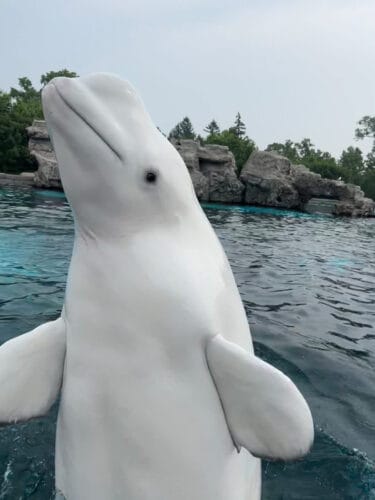

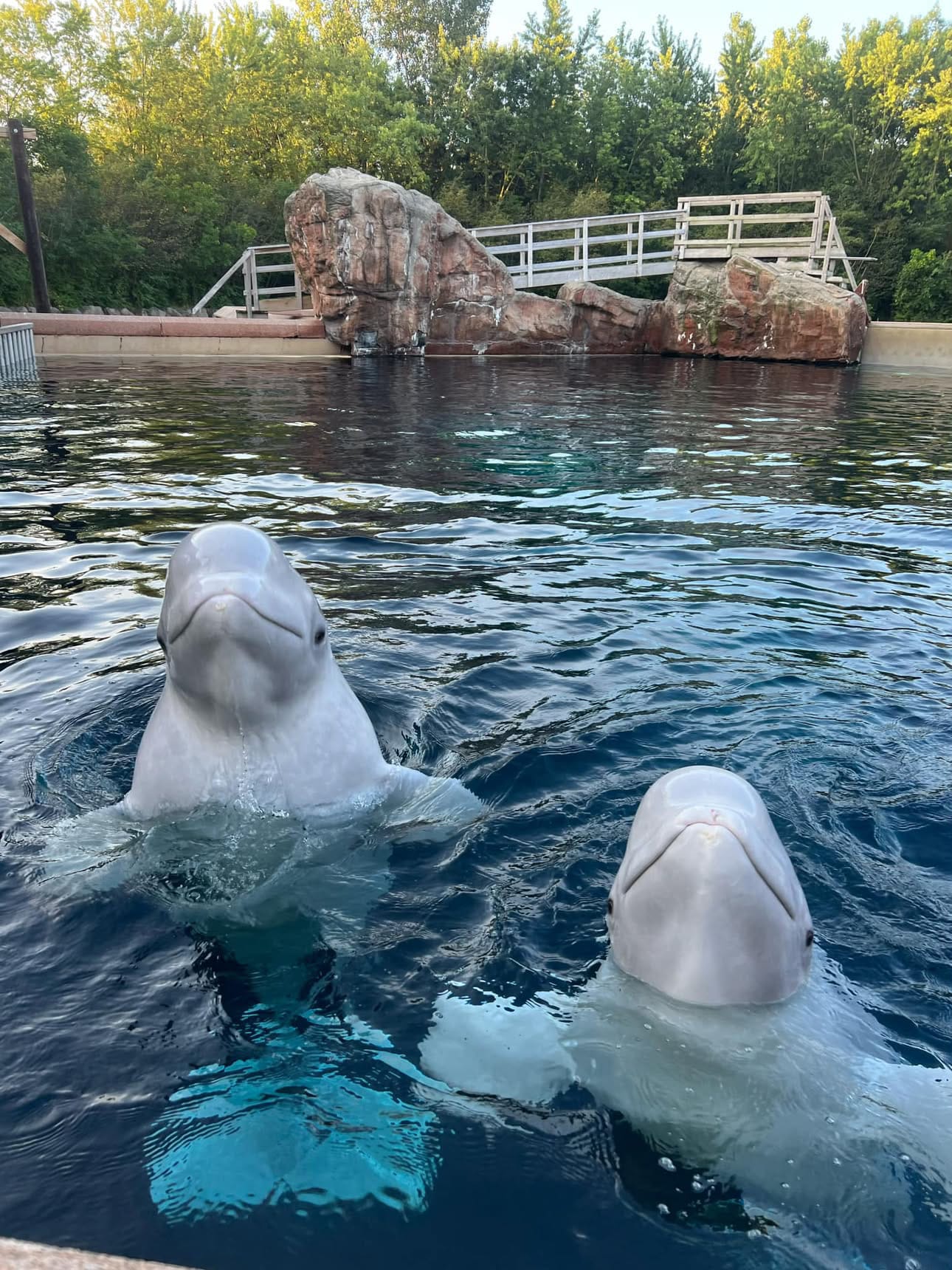
For the first time in more than six decades, there are no whales living in captivity in Canada.
The final six beluga whales remaining at Marineland Canada have officially left the Niagara Falls property, bringing a remarkable and complicated chapter of marine mammal history to a close. Four of the whales – Tank, Odin, Orion, and Tofino were transferred to SeaWorld San Antonio, while two young males, Yukon and Gimli, made the journey to Shedd Aquarium in Chicago.
Their departure marked the completion of an extensive international effort to relocate the 30 belugas and four dolphins that remained at Marineland following the park’s closure to the public. Across six separate transports, the animals were carefully relocated to accredited zoological facilities throughout the United States and Spain, requiring months of coordination between animal care teams, veterinarians, transportation specialists and government agencies.
Among the final departures, however, one beluga carried a particularly significant place in history. Tofino was the last whale to leave Marineland. Weighing approximately 3,300 pounds, Tofino was the final whale physically removed from Marineland’s habitats before beginning his journey to Texas. As he left the property, Canada’s long history of maintaining whales in zoological care effectively came to an end.
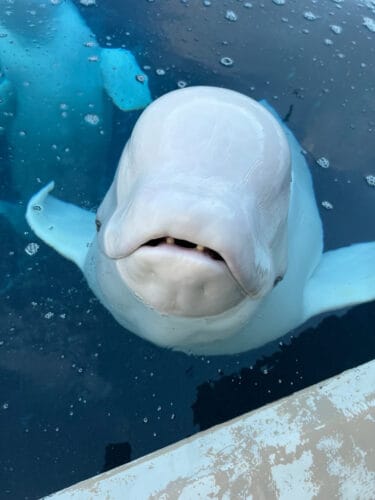
The four newest arrivals bring SeaWorld San Antonio’s total number of rescued Marineland belugas to 13.
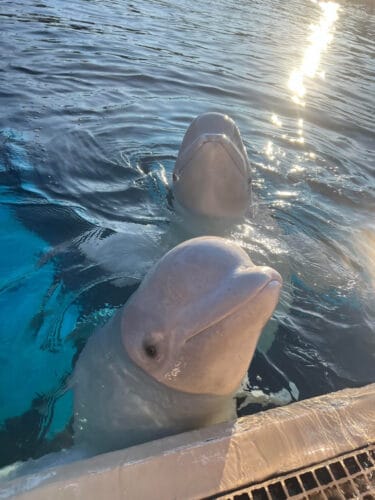
SeaWorld first welcomed males Bertie Botts and Frankie on July 21. Just weeks later, the park received its largest group of the relocation effort when seven females – Xena, Gemini, Skyla, Meeka, Eve, Neva and Calypso completed the nearly 2,000-mile journey from Canada to Texas. Tank, Odin, Orion and Tofino now join them in San Antonio, completing SeaWorld’s role in the Marineland relocation effort.
Since their arrival, the rescued belugas have remained in private, behind-the-scenes areas as they acclimate to their new environment. SeaWorld’s animal care and veterinary teams have been closely monitoring their eating habits, resting patterns, behavior and social interactions before gradually introducing them to new surroundings and, when appropriate, new social groups. The process allows each whale to adjust at its own pace while receiving individualized care throughout the transition.
Meanwhile, Yukon and Gimli arrived safely at Shedd Aquarium in Chicago on September 1, completing Shedd’s third and final Marineland transport. The two males are among the younger whales involved in the relocation, with Yukon at eight years old and Gimli at seven.
Shedd initially welcomed Acadia, Osiris, Sierra and Lillooet in July, followed by Caspian, Peekachu, Secord and Rain in August. With the arrival of Yukon and Gimli, a total of 10 Marineland belugas were relocated to the Chicago aquarium.
The transition, however, has not been without heartbreak. Peekachu, a 23-year-old female, died on August 25, less than two weeks after arriving in Chicago. Shedd reported that bloodwork performed during her care indicated severe dehydration and announced that a necropsy would be conducted to better understand the circumstances surrounding her death.
Peekachu’s loss underscored the immense medical, logistical and emotional complexity involved in relocating such a large population of marine mammals. Moving dozens of belugas across international borders required far more than transportation alone; each whale arrived with an individual medical history, social background and set of needs that care teams must continue to evaluate as the animals settle into their new homes. We extend our greatest condolences to all who knew her.
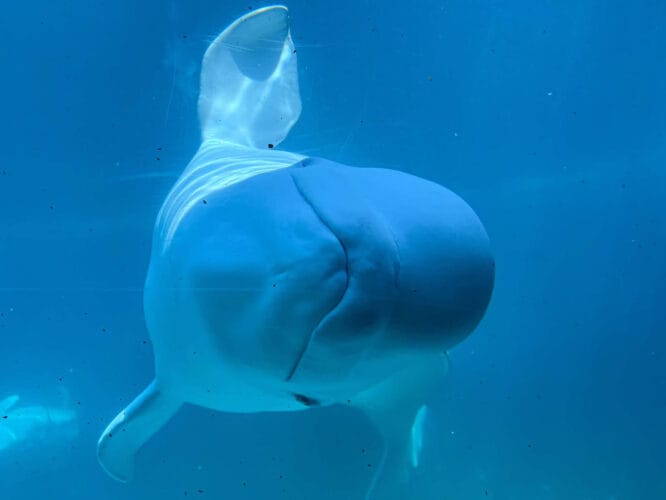
For generations of Canadian families, beluga whales became nearly synonymous with Marineland. Founder John Holer opened the Niagara Falls attraction in 1961, gradually transforming it into a combination of amusement park, zoo and marine mammal facility. Killer whales played a defining role in Marineland’s early identity, but over time, belugas became some of the park’s most recognizable and beloved animals.
Beginning in the 1990s and continuing into the 2000s, Marineland welcomed numerous belugas from Russia, while successful breeding further expanded the population. By the late 2010s, the park was believed to maintain the largest population of belugas in human care anywhere in the world, with nearly 60 whales calling Marineland home at its peak.
Belugas became an unmistakable part of the Marineland experience. At Arctic Cove, visitors could observe the whales up close and participate in interactive experiences, while their distinctive white coloring and curious personalities made them familiar faces in the park’s advertising and in the memories of generations of guests.
As the years passed, however, both Marineland and the broader zoological community found themselves navigating changing public attitudes surrounding whales and dolphins in human care. The park faced increasing scrutiny over animal welfare and facility conditions, particularly during its later years. In 2021, Ontario animal welfare authorities determined that Marineland’s marine mammals were in distress and issued orders addressing concerns, including water quality.
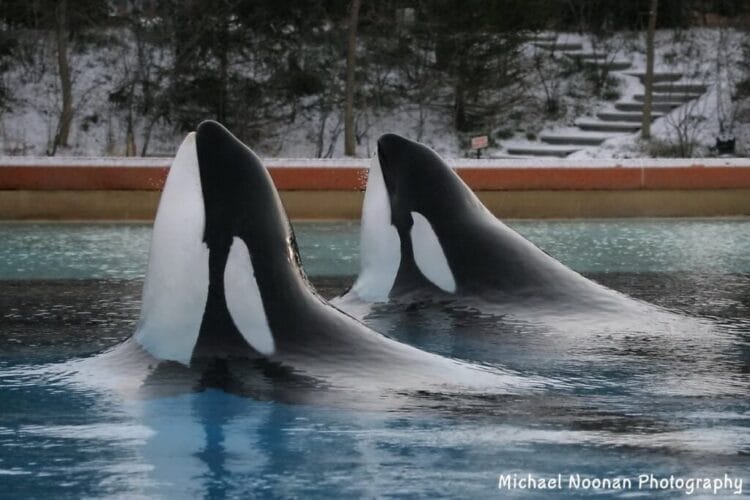
Kiska’s death in March 2023 marked a particularly significant moment. Having lived for years without another member of her species, she had become widely known beyond Marineland and was frequently discussed as attitudes toward cetaceans in human care continued to evolve. At the time of her death, Kiska was the last killer whale living in captivity in Canada. Her passing closed Marineland’s decades-long chapter with orcas.
In 2019, Canada passed landmark legislation prohibiting the capture and breeding of whales, dolphins and porpoises for captivity, with limited exceptions. Cetaceans already living at facilities such as Marineland were permitted to remain in human care, but the legislation fundamentally changed the industry’s future. Without continued breeding or the routine acquisition of additional animals, Canada’s captive cetacean population would inevitably decline over time. And for Marineland, this meant its existing whales represented a population that could no longer be replenished as it had been for decades. The legislation did not immediately end the park’s marine mammal programs, but it established a dramatically different future for a facility whose identity had long been intertwined with whales and dolphins.
At the same time, Marineland itself was entering a period of significant transition. Founder John Holer died in 2018, leaving control of the property to his wife, Marie Holer. Just two years later, the COVID-19 pandemic brought unprecedented disruption to the tourism and amusement industries, adding another layer of uncertainty to the park’s future.
Marineland would never fully return to what it once was. As attendance and operations diminished, questions surrounding the aging property and its remaining animals became increasingly difficult to ignore. The park was eventually put up for sale and remained closed to the public following the 2024 season, leaving dozens of marine mammals still living on the Niagara Falls property. With Marineland no longer operating as the attraction generations of visitors had known, attention increasingly shifted from the park’s future to the animals left behind.
One question now overshadowed everything else: What would happen to the whales?
Finding a facility capable of accepting and caring for a single beluga whale is complicated. Finding suitable homes for 30 of them at once presented an extraordinary challenge with few, if any, modern precedents.
Marineland initially pursued a plan to transfer its remaining belugas to Chimelong Ocean Kingdom in China. Canada’s federal government ultimately rejected the export request, citing concerns that relocating the whales to China could allow them to be bred or used in entertainment performances, which are practices that conflicted with the intent of Canada’s cetacean-protection legislation.
As Marineland’s future remained uncertain, the situation surrounding the whales became increasingly urgent. The park warned that without financial assistance or an approved relocation plan, it could no longer sustain the considerable cost of caring for its remaining belugas and might eventually be forced to euthanize them. That is when things started moving.
SeaWorld, Shedd Aquarium, Georgia Aquarium, Oceanogràfic València and other zoological professionals began working alongside Canadian and American authorities to coordinate the relocation of Marineland’s remaining cetaceans. Finding destinations was only one part of the challenge. Each beluga had to be individually evaluated to determine where it could be safely relocated and which animals should make the journey together. Veterinary and animal care teams reviewed the whales’ medical histories, behavior, and established social relationships before determining appropriate placements. Whenever possible, teams considered existing bonds so socially connected animals could remain together throughout the transition.
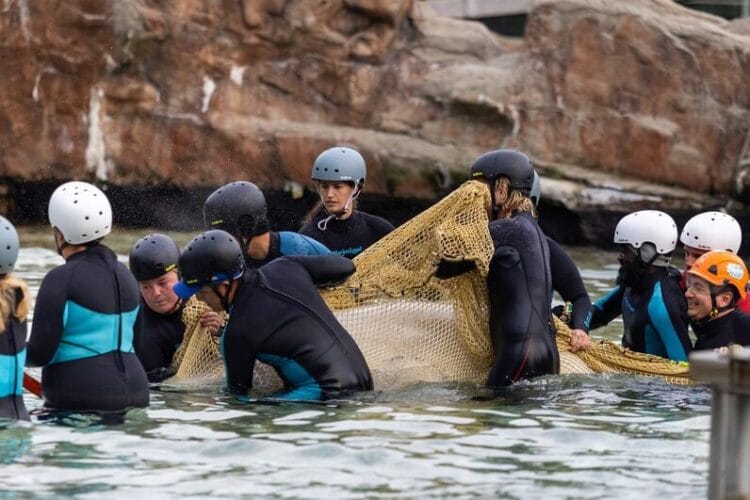
The logistics of moving the whales were equally complex. Each transport required extensive planning, specialized slings and lifting equipment, temperature-controlled transport containers, ground vehicles and cargo aircraft, and teams of veterinarians, animal care professionals, and marine mammal specialists to accompany the whales throughout their journeys.
After months of uncertainty and preparation, the first belugas began leaving Niagara Falls in July. Six whales departed in the initial relocation, followed by another seven. Additional groups soon made their way to Shedd Aquarium, Georgia Aquarium, SeaWorld San Diego and Oceanogràfic València in Spain, steadily reducing a population that had once numbered among the largest collections of belugas anywhere in the world.
Transport by transport, Marineland’s once-enormous beluga population disappeared from the property.
Eventually, only six remained.
On August 31, animal care teams gathered at Marineland for one final round of departures.
The remaining belugas were carefully guided into specialized transport slings and lifted from their habitats by crane as preparations began for their journeys to the United States. For the trainers and animal care professionals who had spent years working alongside them, the day also brought a series of deeply personal goodbyes as the last whales prepared to leave the property.
Yukon and Gimli departed for Shedd Aquarium in Chicago, while Tank, Odin and Orion were prepared for their journey to SeaWorld San Antonio.
And then there was Tofino. Sixty-two years later, Tofino’s departure brought that chapter of Canadian history to a close. For SeaWorld San Antonio and Shedd Aquarium, however, the story of these animals is far from over. The whales must now acclimate to unfamiliar environments, establish new routines and become accustomed to new animal care teams. Over time, they may also be introduced to new social groups as their caregivers continue evaluating their individual behavior, health and compatibility.
That adjustment will not happen overnight as each beluga arrives with its own history, relationships, personality and medical needs, and some may require considerably more time than others to become fully comfortable in their new surroundings. Their care teams will now guide them through the next chapter of lives already shaped by an extraordinary amount of change.
We would like to extend our deepest gratitude and appreciation to every single person involved in this massively complicated but hugely successful mission. Thank you.